
-
No products in the cart.
Quinoa Glycemic Index for Steadier Energy
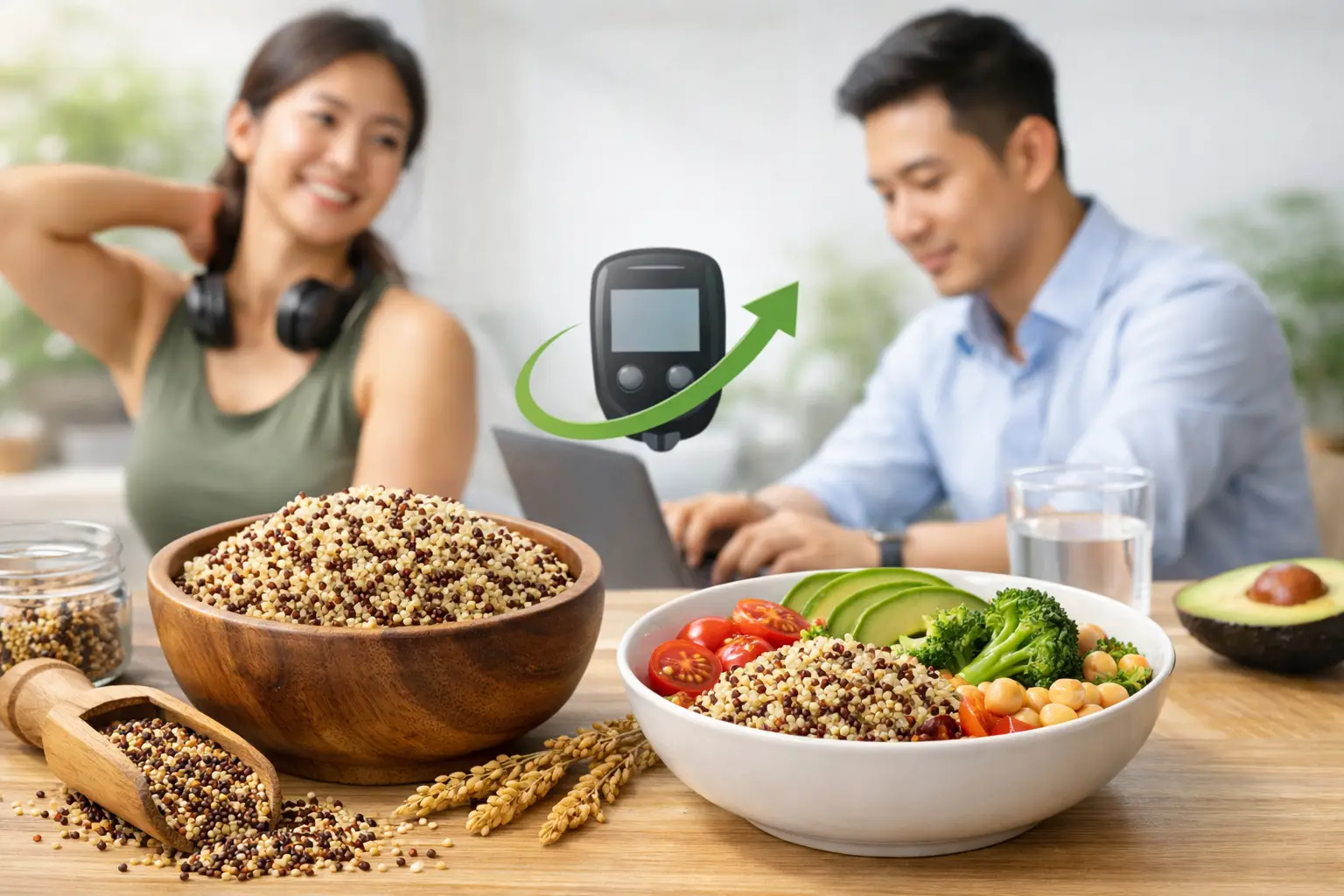
A warm bowl of wholegrain quinoa can be much more satisfying than a refined-carb white rice or yellow noodle dish, but blood sugar response still comes down to the whole plate. The quinoa glycemic index is a useful starting point for anyone managing energy dips, weight goals, or blood sugar, yet it is not the only number that matters. Portion size, cooking method, and what you eat alongside quinoa all play a role.
For everyday meals, quinoa offers a practical middle ground: naturally gluten-free, plant-based, slightly nutty taste, cooks like rice, and easy to pair with vegetables, proteins, and healthy fats. It is a pantry staple that can support healthier blood sugar levels and daily eating patterns without turning meals into a complicated nutrition project.
What Quinoa’s glycemic index tells you
The glycemic index, or GI, ranks carbohydrate-containing foods by how quickly they raise blood glucose compared with pure glucose. A food with a lower GI generally causes a slower, more gradual rise, making it friendlier for blood sugar control. Foods are commonly grouped as low GI at 55 or below, medium GI from 56 to 69, and high GI at 70 or above.
Cooked quinoa is generally considered a low-GI food. Reported values vary by study, quinoa variety, cooking time, and testing method, but a commonly cited glycemic index for Quinoa is around 53. That puts it near the upper end of the low-GI range.
This is encouraging, especially if you use quinoa, a whole grain, to replace high-GI staples such as white rice, instant noodles, pasta, or white bread. Still, GI is measured by feeding a fixed amount of available carbohydrate under controlled conditions. Real life is different. Most of us eat quinoa as part of a meal, not by itself on an empty plate.
Why Quinoa could help you feel fuller
Quinoa contains carbohydrate, but it also brings fiber, protein, and naturally occurring minerals to the meal. Those qualities can help make a serving more filling than refined grains like white rice or yellow noodle, which are often lower in fiber and protein, and easier to overeat. Quinoa sustains energy by slowing digestion, helping you feel fuller and avoid the post-meal slump.
A cup of cooked quinoa provides roughly 39 grams of good carbohydrate, along with about 5 grams of fiber and 8 grams of protein. The precise nutrition can differ slightly by variety and preparation, but the bigger takeaway is simple: quinoa offers more nutrition than quick starch.
Its protein content is particularly useful in plant-forward meals. Pair quinoa with lentils, tofu, eggs, fish, chicken, or Greek yogurt, and you create a more balanced dish that is likely to keep hunger at bay longer and curb cravings. For families, that can mean fewer frantic snack requests an hour after meals.
Glycemic load puts portions in perspective
Glycemic load, or GL, considers both the GI of a food and the amount of available carbohydrate in a typical serving. It is often more helpful when planning meals because a large portion of even a low-GI food can still provide a substantial carbohydrate load.
For example, a half-cup serving of cooked quinoa (about 90-100g) is a sensible starting point for many meals. It can provide satisfying texture and nourishment while leaving room on the plate for non-starchy vegetables (like dark leafy or cruciferous vegetables) and protein like chicken or fish. Someone with higher physical activity needs may do well with more, while someone closely monitoring blood glucose may prefer a smaller serving and a larger portion of non-starchy vegetables. For a general portion guideline, you can safely follow MY HEALTHY PLATE, a recommended portion guideline by Health Hub Singapore, where cooked quinoa can make up one-quarter of the healthy plate, as a whole grain.
There is no one portion that works for everybody. Your activity level, medications, sleep, stress, overall meal pattern, and individual glucose response all matter. If you use a glucose monitor or have been given a meal plan by a health professional, let those insights guide your serving size.
How cooking and meal pairings affect blood sugar
Quinoa is simple to prepare, but small choices can make a meaningful difference in how satisfying the final meal feels.
First, avoid cooking it until it becomes overly soft and mushy. A light, fluffy texture is usually more enjoyable and may preserve a slower-digesting meal structure than heavily overcooked grains. Rinse dry quinoa well before cooking to remove its natural bitter coating, then cook it like rice in a rice cooker, or simmer it in water or a low-sodium broth until the grains are tender and the little white spiral tails appear.
Second, build a complete meal instead of treating quinoa as the main event. Fiber-rich vegetables, a good protein source, and a little healthy fat can slow digestion and add flavor. Think roasted broccoli with baked salmon and quinoa, or a colorful bowl with chickpeas, cucumber, leafy greens, avocado, herbs, and a lemon-tahini dressing.
Third, watch the extras that quietly change a wholesome bowl into a sugar-heavy meal. Sweetened sauces and gravies, large amounts of dried fruit, refined-sugar dressings, and crispy fried toppings can raise the total carbohydrate load quickly. This does not mean food has to be plain. Use citrus, garlic, ginger, fresh herbs, spices, unsweetened yogurt, olive oil, nuts, seeds, and vinegar-based dressings for plenty of flavor.
Cooling cooked quinoa and using it later in a salad can also be a convenient option. Some starch may become more resistant to digestion after cooling. The bigger benefit is practical: having cooked quinoa ready in the refrigerator makes balanced lunches easier to assemble.
Easy ways to enjoy quinoa for balanced meals
Quinoa works across breakfast, lunch, dinner, and snack-time recipes. Its mild, nutty flavor means it can take on both savory and lightly sweet ingredients without needing refined sugar.
For breakfast, try a warm quinoa bowl with unsweetened milk of choice, cinnamon, chia seeds, walnuts, and fresh berries. The chia and walnuts add fiber and healthy fats, while berries bring natural sweetness without relying on syrup or sweetened cereal. You can also try ready-to-eat Quinoa Puffs in cold milk with chia seeds and your favorite nuts/seeds, or try an Overnight Oats Seeds Mix with plenty of quinoa puffs in it.
For lunch, make a quinoa salad with crunchy vegetables, edamame, chickpeas or beans, a simple olive oil and lemon dressing or balsamic vinegar. It travels well for workdays and can be prepared in advance without losing its texture.
At dinner, use quinoa as one part of a plate rather than the entire base. A half-cup scoop beside stir-fried vegetables and tofu, grilled chicken, or fish is an approachable formula. If you enjoy grain bowls, aim for at least half the bowl to come from colorful vegetables.
Quinoa can also replace breadcrumbs in veggie patties or be stirred into soups for extra body. These uses are especially helpful for people looking for gluten-free alternatives with recognizable, clean-label ingredients.
Who may benefit from choosing quinoa?
Quinoa can be a smart everyday option for people who want to make more intentional carbohydrate choices, including those focused on steady energy, blood sugar control, heart-healthy eating, better digestion, active muscle recovery or faster post-operation healing. Its naturally gluten-free status also makes it useful for households avoiding gluten.
For people living with diabetes or prediabetes, quinoa may fit into a balanced eating plan, but low GI does not mean unlimited portions. It is still a carbohydrate-containing food. Pair it thoughtfully with high-fiber vegetables and good protein sources, monitor your own response when appropriate, and follow guidance from your doctor or registered dietitian.
If digestion is sensitive, start with a modest serving (less than one-quarter of a medium plate) and rinse quinoa thoroughly before cooking. The fiber is beneficial for many people, but a sudden jump in fiber intake can cause temporary bloating. Drinking plenty of water and increasing fiber gradually can help.
Choosing quinoa that fits a clean-eating pantry
Look for plain, organic quinoa with a short and clear ingredient list: quinoa, and nothing else. Flavored grain packets can be convenient, but they may contain added sodium, sugars, flavorings, or preservatives that are unnecessary when you can season a simple batch at home or pair quinoa with other foods.
Organic quinoa is a dependable staple for wherever you are in your health journey. Keep it in an airtight container, cook a batch once or twice a week, and use it as a flexible base for meals built around real whole ingredients. Cooked quinoa keeps well in the fridge for up to a week.
The goal is not to chase one perfect GI number. It is to make your everyday plate more nourishing, satisfying, and supportive of your health goals and the way you want to feel.