

-
No products in the cart.
How to Cook Millet for Fluffy, Everyday Meals
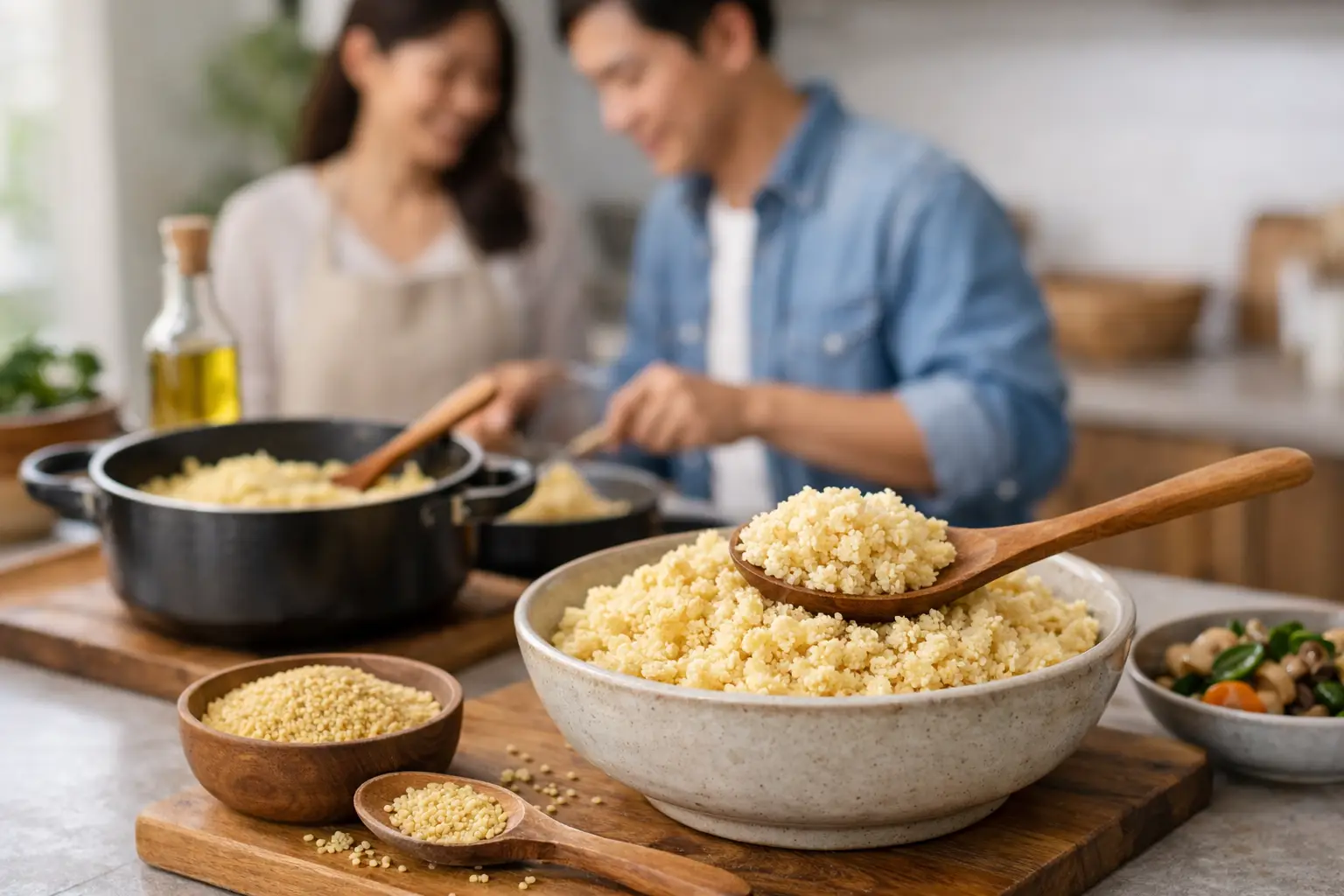
Millet is the quiet pantry staple that makes a week of nourishing meals feel easier. Once you know how to cook millet, its mild, lightly nutty taste and naturally gluten-free texture can take you from a warm breakfast bowl to a vegetable-packed dinner with little effort. Naturally rich in plant protein, fiber, magnesium, phosphorus, and B vitamins, millet supports healthy digestion, heart health, and sustained energy throughout the day. As a wholesome whole grain, it brings both nourishing nutrition and everyday versatility to balanced, plant-forward meals.
How to Cook Millet on the Stovetop
For fluffy millet, use a simple ratio of 1 cup dry millet to 2 cups water or broth. This makes about 3 cups cooked, enough for a few servings or a helpful base for meal prep. A heavier pot with a well-fitting lid will give you the most even results.
Start by rinsing the millet in a fine-mesh strainer under cool water for 20 to 30 seconds. Millet grains are small, so a fine strainer matters. Rinsing removes any dust from storage and gives the finished grain a cleaner taste.
For deeper, toastier flavor, dry-toast the rinsed and well-drained millet in the saucepan first. Set the pan over medium heat and stir for 3 to 5 minutes, until the grains smell warm and nutty. This step is optional, but it is especially good when millet will be served in a savory bowl, pilaf, or salad.
Add 2 cups water or broth and a small pinch of salt. Bring it to a boil, then immediately lower the heat to a gentle simmer and cover the pan. Cook for 18 to 20 minutes. Resist the urge to lift the lid repeatedly, since trapped steam helps the grains cook evenly.
When the liquid has been absorbed, remove the pan from the heat and let it stand, covered, for 10 minutes. This resting time is what separates tender, fluffy millet from a wet or compressed pot of grains. Fluff gently with a fork before serving.
If you prefer a softer texture, add an extra 1/4 to 1/2 cup of water. Millet is forgiving, but texture comes down to your intended meal. Fluffy grains suit savory sides and grain bowls, while more liquid creates a comforting spoonable breakfast.
The Best Millet-to-Liquid Ratio for Every Meal
One ratio does not fit every recipe. The right amount of liquid depends on whether you want distinct grains, a creamy porridge, or a bake-ready base.
For a fluffy side dish or grain bowl, use 1 cup millet to 2 cups liquid. For creamy millet porridge, use 1 cup millet to 3 cups liquid, such as water, unsweetened plant milk, or a combination of both. Simmer it a little longer, stirring now and then, until it reaches the texture you enjoy.
For a savory, softer pilaf, use 1 cup millet to 2 1/4 cups broth. It becomes tender enough to pair with roasted vegetables, chickpeas, herbs, and a simple olive oil dressing. If you are preparing millet for patties or veggie burgers, a softer cook is useful because the grains bind more easily with mashed beans or vegetables.
A rice cooker can also make millet convenient on especially busy evenings. Use the same 1:2 ratio, choose the regular white rice setting if your cooker has one, and allow the millet to rest for 10 minutes after the cycle finishes. Results vary slightly by machine, so check the first batch and adjust the liquid next time if needed.
Build Better Flavor Before and After Cooking
Millet has a gentle taste, which is exactly why it works with so many ingredients. Think of it as a clean canvas rather than a grain that needs to be hidden. Toasting before cooking adds a nut-like aroma, while broth gives a savory foundation without extra work.
For a bright everyday bowl, cook millet in vegetable broth with a pinch of garlic powder. Fold in roasted broccoli, mushrooms, or sweet potato, then finish with lemon juice, fresh herbs, and toasted seeds. For extra protein, add lentils, edamame, tofu, or a soft-boiled egg if that suits your diet.
For breakfast, cook millet with a sprinkle of Ceylon cinnamon powder and unsweetened plant milk. Once creamy, top it with berries, sliced banana, chia seeds, nuts, and a spoonful of nut butter. Naturally sweet fruit can bring plenty of flavor, so there is often no need for refined sugar. A little cacao powder, coconut flakes, or dried fruit can make it feel special without turning breakfast into dessert.
Millet also works beautifully in place of couscous in salads. Let cooked millet cool completely, then toss it with cucumber, tomato, parsley, chickpeas, lemon, and olive oil. Its small grains hold dressing well and give the salad a satisfying bite.
Common Millet Mistakes and Easy Fixes
The most common problem is millet that turns out mushy. Usually, this means there was too much liquid, the heat was too low to maintain a gentle simmer, or the grains were stirred too often. Use the 1:2 ratio for fluffy millet, keep the pot covered, and let it rest about 10min before fluffing.
If the millet is still firm after the cooking time but the pot is dry, add 2 to 3 tablespoons of hot water, cover it again, and cook for another 3 to 5 minutes. Let it stand afterward. Adding a little liquid at a time is better than flooding the pot and losing the texture you wanted.
If the grains clump together, they may simply need a gentle fork fluffing after their rest. A teaspoon of olive oil or Sacha Inchi oil for Omega 3s or a small pat of butter stirred in at the end can help separate the grains and add richness. For a more delicate result, avoid pressing or packing millet into the serving bowl.
A bitter flavor is less common, but it can happen when millet has been stored too long or cooked without rinsing. Keep dry millet in an airtight container in a cool, dry place, and use it while it still smells fresh and mild. Choose organic, clean-label pantry staples whenever possible, with no unnecessary additives or preservatives competing with the food itself.
Easy Ways to Use Cooked Millet All Week
Cooked millet keeps well in a covered container in the refrigerator for up to 4 days, making it a practical make-ahead ingredient. Reheat it with a splash of water or broth, covered, so the steam brings back its tenderness.
Turn one batch into a few different meals: serve it warm under roasted vegetables for dinner, stir it into soup for more substance, use it cold in a lunch salad, or warm it with plant milk for breakfast. This kind of flexibility is what makes whole-food cooking more realistic on full schedules.
Nature’s Superfoods believes everyday nourishment should start with ingredients you recognize and trust. Pair organic millet with colorful produce, beans, seeds, spices, and healthy fats, then adjust each bowl to what your body and schedule need that day.
The best way to make millet a habit is not to search for a perfect recipe. Cook a simple pot, season it with what you already enjoy, and let this small, nourishing grain earn its place in your regular rotation.