
-
No products in the cart.
Quinoa and White Rice: Building Balanced Meals Your Way
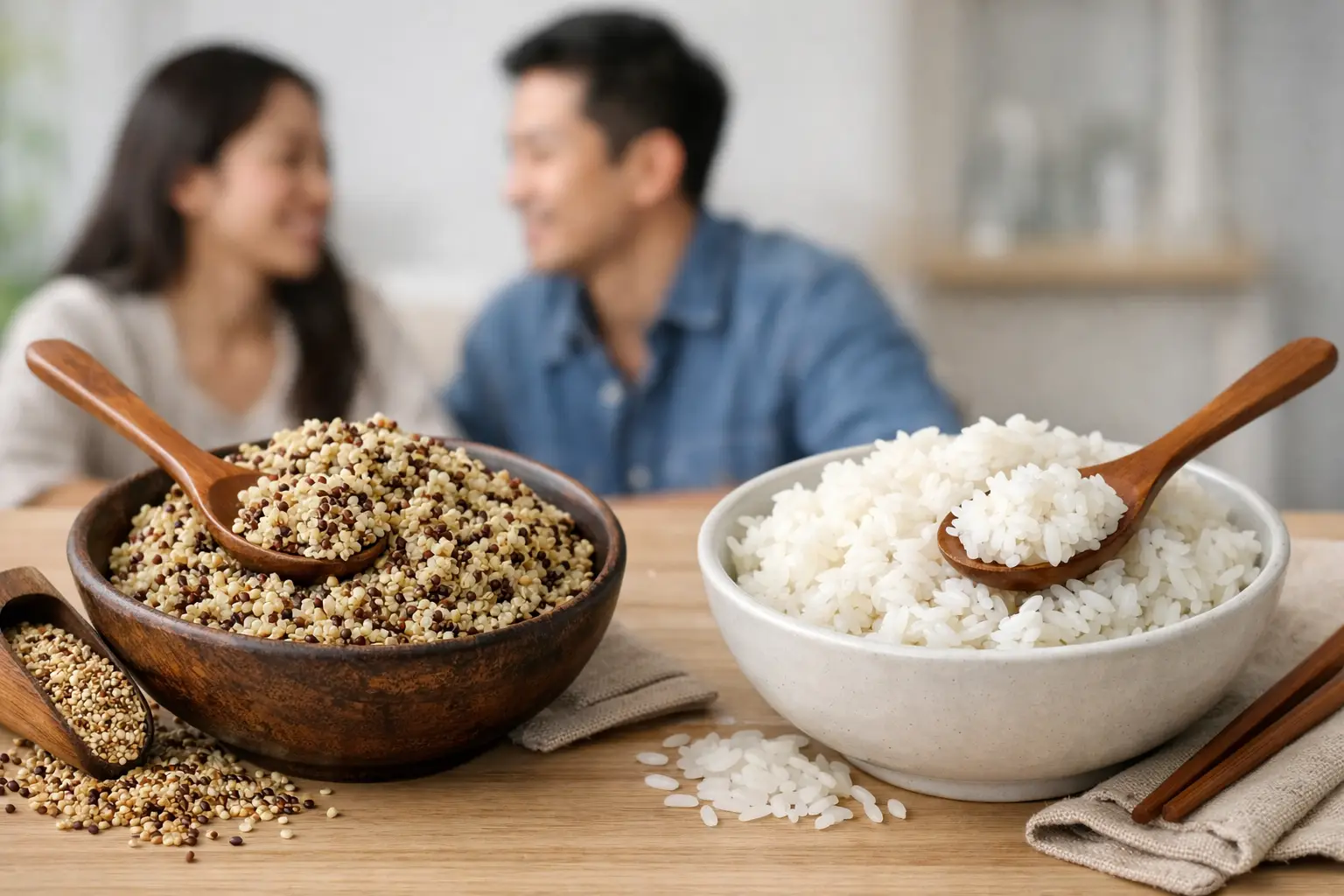
🍚 Rice is comfort food—a quick lunch base or the side that makes dinner feel complete. But when it comes to quinoa versus white rice, the answer isn’t that one should replace the other in every meal. It’s about choosing the grain that fits your appetite, schedule, taste preferences, and health goals at different points in your wellness journey.
🌱 Quinoa brings more plant protein, fiber, and minerals, while white rice offers familiarity, a gentle texture, and a mild neutral flavor that pairs easily with many dishes. Both can have a place in a nourishing kitchen. The real benefit comes from knowing what each one contributes to your plate—and how to combine them with other foods to build balanced, satisfying meals.
Quinoa versus white rice: the key differences
Quinoa is technically a seed, though it cooks and serves much like a grain. It has a lightly nutty flavor, a fluffy texture, and a naturally gluten-free profile. White rice is rice that has had its bran and germ removed, leaving the soft, pale center of the grain. This refining process gives it its mild flavor, tender bite, and longer shelf life, but removes much of the naturally occurring fiber and micronutrients.
A cooked cup of quinoa generally provides about 8 grams of protein and 5 grams of fiber. A cup of cooked white rice provides about 4 grams of protein and less than 1 gram of fiber. Quinoa also supplies minerals like magnesium, iron, zinc, and phosphorus— nutrients that rice offers in far smaller amounts— along with B‑vitamins that support energy and metabolism.
White rice is not “bad” food. It is a practical carbohydrate source that is easy to digest for many people, works well in family meals, and can be especially useful when you need simple fuel before or after activity. In the United States, many white rice products are enriched with certain B vitamins and iron after processing, although enrichment does not restore all the nutrients found in the original grain.
For steadier energy, quinoa has an edge
Carbohydrates are the body’s preferred quick energy source, and both foods provide them. The difference is how the meal may feel afterward. Because quinoa contains more fiber, protein, and healthy fats than white rice, it is often more filling and may support a steadier rise in blood sugar when eaten as part of a balanced meal —reducing the likelihood of experiencing a ‘food coma.’
This can be helpful for people mindful of energy dips, appetite, or blood sugar management. But portion size and the overall plate matter just as much as the grain. A large serving of quinoa drenched in sugary sauce or salty gravy isn’t automatically balanced, while a modest serving of white rice with vegetables and lean protein can still make a nourishing balanced meal.
White rice (GI value ~73) typically ranks higher on the glycemic index than quinoa (GI value ~50–55), meaning it may raise blood sugar more quickly. Still, glycemic response varies by person and is influenced by rice variety, cooking method, portion size, and the foods served alongside it. Pairing a modest portion of rice—about a quarter of a medium plate— with protein, healthy fats, and fiber‑rich vegetables is a simple way to make the meal more balanced and blood sugar‑friendly.
Protein and fiber: why quinoa feels more substantial
Quinoa contains all nine essential amino acids, making it a complete plant protein. These amino acids are the building blocks your body cannot produce on its own— they support tissue growth & repair, energy metabolism, immune functions and overall wellness. That is one reason it is so useful in plant-forward meals, especially for people looking to add more protein-rich variety beyond meat and dairy. It will not replace every protein source on its own, but it can make salads, grain bowls, breakfast porridge, and veggie patties more satisfying and nutritious.
Its fiber also supports healthy digestion and helps meals feel more substantial. For many adults in Singapore, fiber intake falls short of daily needs, particularly when meals rely heavily on refined carbs and packaged snacks with few vegetables. Swapping white rice for quinoa —or mixing the two- a few times a week can be one easy, realistic way to add more fiber and protein to everyday eating.
If you’re not used to high‑fiber foods like quinoa, start with a smaller serving. A sudden increase in fiber can cause digestive discomfort for some people. Drink more water, rotate your whole‑food, high‑fiber staples, and allow your digestive tolerance to build gradually.
When white rice may be the better choice
Nutrition is not a competition, and white rice has useful qualities that quinoa does not always match. Its neutral flavor works beautifully with stir-fries, curries, soups, sushi-style (chirashi) bowls, and family recipes where you want the main dish to shine. It is also usually less expensive, more widely available, and familiar to even selective eaters.
For someone with a sensitive stomach—or during times when high‑fiber foods are harder to tolerate—white rice can be a gentle option. Athletes and active individuals may also value it as an easily digested source of carbohydrates around training, providing quick fuel, especially when followed by a protein‑rich meal.
The goal isn’t to make white rice disappear from your pantry. Instead, think in terms of frequency and balance. If rice is your everyday staple, try alternating or mixing it with quinoa, millet, beans, sweet potatoes, or other whole‑food carbohydrates. Adding variety not only broadens your nutrient intake but also keeps meals more interesting.
Taste, texture, and cooking matter
The grain you enjoy is the one you are more likely to eat consistently. Quinoa has a distinct earthy, slightly nutty flavor that works well with lemon, herbs, roasted vegetables, warm spices, and savory dressings. White rice is softer and more neutral, making it a dependable canvas for bolder flavors.
Quinoa is easy to cook and prepares much like rice. Before cooking, rinse it well in a fine‑mesh strainer under running water to remove its natural coating, called saponin, which can taste bitter. You can then cook quinoa in a rice cooker using the same water ratio as rice— or even mix rice with quinoa in equal proportions in the cooker. Alternatively, simmer one part quinoa with about two parts water or broth for 15–20 minutes over medium heat, let it rest covered for a few minutes, and fluff with a fork before serving.
White rice preparation depends on the variety, but it generally requires less hands‑on effort. For either choice, cook only what you need or cool leftovers promptly and refrigerate them. Cold cooked grains make convenient bases for next‑day lunches, especially when tossed with crisp vegetables, salads, and a simple protein.
Cooked quinoa can be refrigerated for about 5–6 days in an airtight container. This means you can prepare a big batch to last the whole week and reheat portions in the microwave whenever you want to eat them.
How to choose for your everyday meals
Choose quinoa when you want a more nutrient-dense base with extra fiber, protein and minerals. It is especially useful in meal-prep bowls, hearty salads, warm breakfast bowls, and plant-based dinners. Organic quinoa from a quality-focused source, such as Nature’s Superfoods prewashed white quinoa, can be an easy pantry staple for meals that feel clean, filling, and full of natural flavor.
Choose white rice when you want comforting texture, quick energy, a budget‑friendly staple, or a grain that fits a favorite family recipe. In moderate portions, it can be part of a health‑conscious meal when the rest of the plate includes colorful vegetables, lean protein, and healthy fats such as avocado, olive oil, nuts, seeds, or tahini.
You can also combine them. Mixing quinoa with white rice softens quinoa’s flavor and texture while adding more fiber and protein than rice alone. This is a helpful entry point for children, busy households, or anyone trying a new pantry staple without changing the meal too dramatically.
A simple balanced plate-building approach
Rather than judging a meal by one ingredient, build it around what helps you feel nourished and satisfied. Start with a moderate serving of quinoa, rice, or a mix—about a quarter of a medium plate, half a cup, or a cupped handful. Add a generous portion of vegetables, a protein source such as lentils, eggs, tofu, fish, chicken, or tempeh, then finish with flavor from herbs, spices, citrus, or a wholesome sauce such as tahini‑lemon dressing, avocado‑yogurt dip, or olive oil vinaigrette.
For blood sugar awareness, quinoa may be the smarter choice, but white rice can still fit when portions are moderate and the meal is balanced with high-fiber vegetables, beans and lean protein. For gluten‑free eating, both white rice and quinoa are naturally gluten‑free. However, anyone with celiac disease should choose products labeled gluten‑free to reduce the risk of cross‑contact. At the family table, keeping both options available makes healthy eating feel flexible rather than restrictive.
Quinoa and white rice do not need to compete for a permanent spot on your plate. Let quinoa carry the meals where you want lasting fullness and extra nutrition, and let white rice bring ease and comfort when that is what the moment calls for. A well-stocked pantry gives you choices, and those small, practical choices are what help healthy eating last.