

-
No products in the cart.
Acai Powder Review: Beyond the Acai Bowl
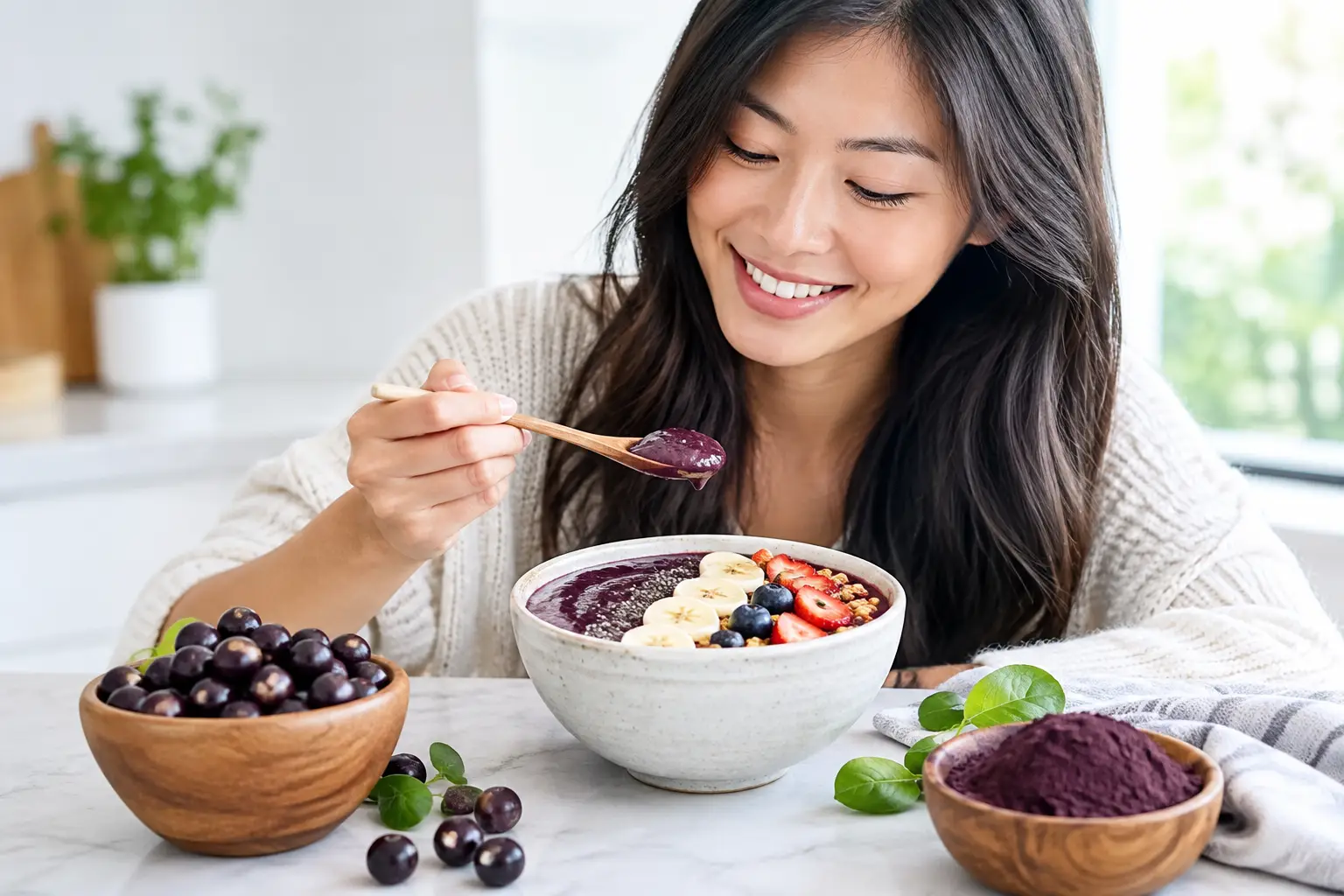
A spoonful of organic acai powder can transform an ordinary yogurt bowl or post-workout smoothie into something bright, berry-rich, and naturally nutrient-dense. But a good acai powder review should look beyond its striking purple colour. The type of acai powder you choose influences flavour, texture, ingredient purity, and the retention of the naturally occurring antioxidants that make acai so popular, all of which affect how well it fits into your everyday wellness routine.
Pure freeze-dried acai powder is often grouped with trendy superfoods, yet its real value is far more practical. It provides a convenient, shelf-stable way to enjoy acai’s naturally occurring polyphenols, including anthocyanins, along with its distinctive wild berry flavour in breakfasts, smoothies, snacks, and recipes. Unlike many sweetened acai bowls and flavoured drink mixes, pure freeze-dried acai powder contains no added sugars or unnecessary additives. For anyone looking to build a cleaner, healthier pantry, it is a simple way to incorporate more antioxidant-rich foods into everyday meals.
Acai Powder Review: What Makes a Good One?
Acai berries grow on palm trees in the Amazon region and are highly perishable once harvested. To preserve them, the fruit is typically pulped, dried and milled into a fine powder. The best acai powders are made from organic acai pulp that is freeze-dried rather than spray-dried to help retain more of its naturally occurring nutrients, antioxidants and flavour compounds. This gentle process removes water while preserving the berry’s rich colour and characteristic taste. Because freeze-dried acai powder is produced from whole acai pulp rather than diluted acai juice concentrates, it often has a darker, richer purple colour that reflects better retention of anthocyanins and other natural plant pigments. How the berries are processed is one reason quality varies so much from one acai product to another.
The best acai powders keep the ingredient list reassuringly short: organic freeze-dried acai pulp powder, with only a small amount of organic lime juice powder to help naturally maintain freshness and preserve the berry’s colour and flavour. Some acai products contain added sugar, maltodextrin, flavourings, carriers, or other fillers to improve sweetness, texture, or bulk. While these additions may make a product more immediately palatable, they alter the nutritional profile and reduce the proportion of real acai in each serving. If your goal is a versatile superfood ingredient rather than a dessert-style blend, a minimally processed freeze-dried acai pulp powder is usually the better choice.
A quality acai powder made from freeze-dried acai pulp should have a deep, dark purple colour, a visual sign of the naturally occurring anthocyanins and plant pigments that give acai its distinctive appearance. It should also have a mild natural tartness and subtle wild berry notes. Acai is generally less sweet than blueberry powder and less sharp than cranberry powder. Rather than overpowering a recipe, it works best as a supporting ingredient, adding depth, colour, and complexity to smoothies, yogurt bowls, and other everyday foods.
Texture matters, too. A finely milled powder blends more smoothly into smoothies, yogurt, and cold liquids, creating a more pleasant eating experience. Some natural clumping may occur after opening, especially in humid environments, and is not necessarily a sign of poor quality. However, a stale or rancid aroma, a noticeably faded colour, or hard, sticky clumps may indicate that the powder has been exposed to excessive heat or moisture. To help preserve freshness, flavour, and the naturally occurring antioxidants in acai, store the powder in an airtight container and refrigerate where possible, particularly in tropical climates such as Singapore where heat and humidity can accelerate the loss of freshness and flavour.
The organic difference
Choosing certified organic acai helps reduce unnecessary exposure to synthetic agricultural inputs. It also aligns with a wider clean-eating approach, especially if you already choose organic pantry staples such as chia seeds, cacao, matcha, or rolled oats.
Organic alone is not the entire quality story. Look for clear sourcing information, careful processing, and a brand that takes ingredient safety seriously. Products that avoid additives, preservatives, refined sugar, and unnecessary fillers make it easier to know exactly what is in your bowl. That clarity is particularly helpful when you are shopping for children, managing dietary preferences, or simply trying to make healthier habits stick.
What Acai Powder Can Add to Your Wellness Routine
Acai’s deep purple pigments come from naturally occurring anthocyanins, the same family of compounds found in berries, purple grapes, and red cabbage. Acai also contains fiber and small amounts of naturally occurring fats, which give it a more rounded profile than many fruit powders.
Still, it helps to keep expectations realistic. Acai powder is not a replacement for a varied, balanced diet, regular movement, quality sleep, or medical advice. Its strength lies in providing a convenient way to incorporate more antioxidant-rich plant foods into your daily routine. Wherever you are in your health journey, nutrient-rich ingredients used consistently tend to be more valuable than dramatic promises.
For those looking to support steady energy, digestive wellness, or a heart-healthy eating pattern, acai powder works best when paired with other nutrient-dense whole foods. Blend it into smoothies with unsweetened plant milk, rolled oats, chia seeds, and a clean protein powder, rather than mixing it into fruit juices or sweetened drink blends. You can also stir a spoonful of acai powder into unsweetened Greek yogurt or oatmeal, or sprinkle it over fresh fruit, nuts, and whole-grain breakfast cereals. These simple combinations create a more balanced, satisfying meal while adding naturally occurring antioxidants and a wider variety of plant foods to your diet, compared with bowls built primarily around sweetened toppings.
Flavor, Texture, and Value: The Honest Trade-Offs
Acai powder is not inexpensive, and that is understandable. The berries are harvested in a specific region of South America, processed quickly, and converted into a concentrated powder. Because its flavour is naturally subtle, earthy, and mildly tart, it can feel underwhelming if you are expecting the rich sweetness of a café-style acai bowl, which is often blended with fruits, juices, sweeteners, and toppings.
It is also less forgiving than frozen acai puree when making thick, spoonable smoothie bowls. Powder can add color and berry depth, but it does not create the icy, creamy base on its own. For a thick bowl, use frozen banana, mango, berries, or avocado as the foundation, then add two to three teaspoons of acai powder.
On the other hand, acai powder wins on convenience. It requires no freezer space, travels well, and lets you use only the amount you need. A small pouch can go a surprisingly long way when used as an everyday ingredient for adding naturally occurring antioxidants and berry flavour, rather than as the star ingredient in every recipe.
Its earthy wild berry note is another trade-off. Some people love it right away; others prefer it blended with naturally sweet fruit. If you are new to acai, start with a teaspoon in a frozen banana smoothie or vanilla yogurt. Once you enjoy its flavor, increase the amount gradually.
How to Use Acai Powder Without Overthinking It
The easiest way to use acai is to add it to meals you already make. Stir a teaspoon into overnight oats with chia seeds and cinnamon. Blend it into a smoothie with frozen banana and unsweetened almond milk. Mix it into plain Greek yogurt or coconut yogurt, then top with low-sugar granola, sliced fruit, and pumpkin seeds.
For a fast breakfast that feels more substantial, try this simple combination: blend frozen banana, a handful of mixed berries, two teaspoons of acai powder, two tablespoons of oats, and enough milk to keep the blender moving. Finish with a spoonful of chia seeds or nut butter. The result is naturally colorful, filling, and free from the need for sweeteners or honey.
Acai can also work in homemade snack bites, chia pudding, or no-bake oat bars. While freeze-dried acai powder can be used in baked goods, it tends to shine most in smoothies, yogurt, oatmeal, and other low-heat recipes where its colour, flavour, and naturally occurring antioxidants are better preserved.
A practical serving guide
Most people only need one to two teaspoons per serving. If you are introducing acai to a child, start with a small amount like one teaspoon mixed into a familiar smoothie or yogurt rather than serving it on its own.
People with allergies should always review the label and manufacturing information. And if you are under medical care for a health condition or follow a prescribed eating plan, treat acai as a food ingredient within that plan, not as a treatment.
Who Will Enjoy Acai Powder Most?
Acai powder is a strong pantry choice for busy adults who want a quick smoothie nutrition upgrade, parents looking for less processed ways to add variety to breakfast, and individuals looking for antioxidant-rich whole foods. It is especially useful for those who prefer gluten-free, plant-forward ingredients with no refined sugar or artificial extras.
Nature’s Superfoods approaches acai as a practical part of a clean-label kitchen: an organic, thoughtfully sourced ingredient that can support healthier everyday choices without making healthy eating complicated.
The most worthwhile acai powder is the one you will actually use. Choose a clean, organic option with minimal ingredients, keep it sealed tightly in a cool, dry place, and enjoy it regularly as part of a balanced, everyday approach to eating well.