

-
No products in the cart.
Are Rolled Oats Gluten Free? What to Check
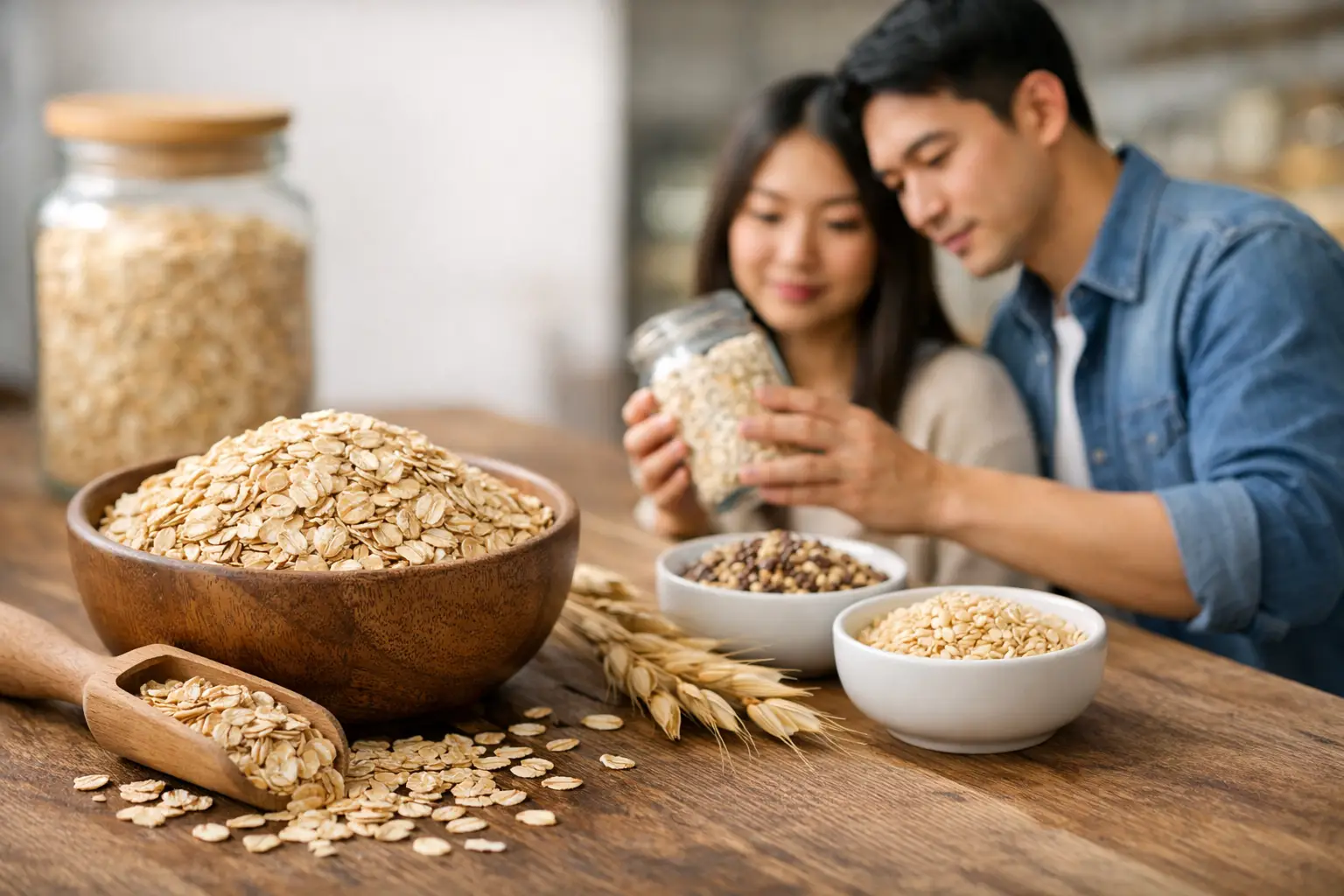
A warm bowl of oats can be one of the simplest ways to start the day well. But if you avoid gluten for celiac disease, gluten sensitivity, or a gluten-free household, one question matters : are rolled oats gluten free? The short answer is that oats are naturally gluten-free, but the oats in a packet are not automatically safe for every gluten-free diet.
The difference comes down to how oats are grown, transported, milled, and packed. Knowing what to look for helps you choose breakfast staples with confidence, wherever you are in your health journey.
Are Rolled Oats Gluten Free by Nature?
Rolled oats come from whole oat groats that have been steamed and flattened. Oats do not naturally contain wheat, barley, or rye, which are the grains that contain gluten. In their pure form, plain rolled oats are gluten-free.
The concern is cross-contact. Oats may be grown near wheat, harvested using shared equipment, stored in shared facilities, or processed on the same production lines as gluten-containing grains. Even a small amount of wheat, barley, or rye mixed into oats can make them unsuitable for someone with celiac disease.
This is why an ingredient list that says only “oats” is helpful, but not always enough. For people who need to strictly avoid gluten, the package should clearly state that the oats are gluten-free. A recognized gluten-free certification can offer another layer of reassurance because it indicates that the product has been tested and managed under defined standards.
Oats and Gluten: Hidden Risks in the Supply Chain
The popularity of oats does not remove the need for careful sourcing. Conventional oat supply chains can involve multiple farms, grain elevators, trucks, and mills. At any point, stray grains may enter the batch. This is especially relevant when oats are handled alongside wheat, a common gluten-containing ingredient in many grain facilities.
Some producers use a purity protocol, meaning oats are grown and handled with practices designed to prevent gluten-containing grains from entering the supply chain. Others use sorting technology to remove foreign grains after harvest. Both approaches can be used in gluten-free production, but clear labeling and reliable quality controls are what shoppers should prioritize.
For a family that eats gluten‑free by preference, trace amounts in regular organic oats are usually not a concern. For someone diagnosed with celiac disease, however, consistent cross‑contact controls are essential. In Singapore, while celiac disease is considered uncommon, research indicates that around 5.5% of patients with irritable bowel syndrome (IBS) show markers of the condition — highlighting that it is often overlooked. Some cases of celiac disease are misdiagnosed as IBS or chronic gastritis. Common signs include chronic diarrhea, bloating, weight loss, fatigue, anemia, and an itchy skin rash known as dermatitis herpetiformis.
How to Choose Safe Rolled Oats (For Celiac Condition)
Start with the front and back of the package. Look for a clear gluten-free claim, then check that the ingredient list is simple. Plain rolled oats should not need refined sugar, artificial flavors, preservatives, or unnecessary fillers to taste good.
Be more cautious with flavored instant oat cups, oat-based cereals, and commercial granolas. These products may contain gluten-containing ingredients such as wheat flour, wheat germ, barley malt syrup, rye flakes, malt flavoring or cookie pieces. A product can begin with gluten-free oats and still become unsuitable because of what is added later.
What About Avenin Sensitivity?
Most people who avoid gluten can enjoy certified gluten-free oats. Still, oats contain a protein called avenin. A small number of people with celiac disease may react to avenin itself, even when the oats have no gluten cross-contact. The most common symptoms include bloating, abdominal pain, altered bowel habits, fatigue, brain fog, and skin flare‑ups such as eczema or dermatitis.
If you suspect avenin sensitivity, the first step is to stop eating oats and monitor whether symptoms improve. Keep a simple food and symptom diary to track changes. Because avenin reactions can mimic irritable bowel syndrome or overlap with celiac disease, it’s important not to self-diagnose. A healthcare professional or dietitian can help you confirm whether oats are the trigger and rule out other conditions.
Medical guidance may include reintroducing certified gluten-free oats in small amounts under supervision, or avoiding oats altogether if symptoms persist. Alternatives such as our quinoa powder, quinoa puffs, millet, rice flakes, or buckwheat can provide similar nutrition without the risk. Listening to your body and following individualized advice ensures oats remain a safe and nourishing choice — or that you find suitable substitutes if needed.
Rolled Oats, Quick Oats, or Steel-Cut Oats
The gluten question is not really about the type of oat. Rolled oats, quick oats, and steel-cut oats all come from oats, so each can be naturally gluten-free. What changes is their processing and cooking time.
Rolled oats are steamed and flattened, so they cook relatively quickly while retaining a pleasant, hearty bite. For a no‑cook option, you can simply pour hot or boiling water over rolled oats to soften them quickly. Rolled oats work beautifully in overnight oats, granola, muffins, and pancakes. Quick oats are cut and rolled thinner, which makes them convenient for fast breakfasts but gives them a softer texture. Because they are more processed, quick oats tend to digest faster and may lead to a quicker rise in blood sugar compared to rolled oats or steel-cut oats. Steel-cut oats are chopped rather than rolled, creating a chewier porridge that takes longer to cook.
No matter which style you prefer, the same label rule applies: choose a product that is clearly labeled gluten-free if gluten avoidance is a priority. Cross-contact can occur with any oat format.
While labeling matters for those who must avoid gluten, in Singapore where celiac disease is relatively uncommon, the choice of oat format often comes down to lifestyle preferences such as blood sugar management, cooking time, and texture. If someone can enjoy yellow noodles or commercial bread without any issue, then being certified gluten‑free need not be a health criterion when choosing oats — convenience, taste, and personal wellness goals may matter more.
Easy Ways to Make Gluten-Free Oats More Nourishing
Oats have a naturally mild, nutty flavor and a satisfying texture, making them a favorite for porridge, overnight oats, baking, granola, and energy bites. They also provide fiber, including beta-glucan, a type of soluble fiber associated with supporting heart health especially healthy cholesterol levels, and helping you feel full after a meal.
Once you’ve chosen trusted rolled oats, they make an easy foundation for a filling breakfast or snack. Pairing oats with protein, healthy fats, and fruit helps create steadier energy that lasts throughout the morning.
For overnight oats, combine rolled oats with unsweetened milk of choice, chia seeds, Ceylon cinnamon, and berries. Or simply get our all-in-one convenience pack of Quick Overnight Oats with super-seeds. Chia adds texture and plant-based fiber, while berries bring natural sweetness without relying on refined sugar. For a warmer option, cook oats with a pinch of cinnamon and top with banana, walnuts, and a spoonful of natural nut butter.
Oats also work beyond breakfast. Use them to add texture to homemade veggie patties, blend them into smoothies for a thicker consistency, or make a simple crumble topping with oats, cinnamon, coconut oil, and chopped nuts. If you bake for a gluten-free household, use certified gluten-free oats and confirm that every other ingredient, including baking powder and chocolate chips, is gluten-free too.
Nature’s Superfoods believes everyday wellness starts with pantry choices that are simple, clean, and enjoyable to repeat. Organic, carefully sourced staples can make it easier to build meals around ingredients your body recognizes, without making healthy eating feel complicated.
The Bottom Line for Your Oat Bowl
Rolled oats are naturally gluten‑free. For anyone with celiac disease or a strict medical need to avoid gluten, certified gluten‑free oats (clearly stated on the pack label) remain the most reassuring choice. If you do not have celiac disease or gluten intolerance, cross‑contact is generally not a concern, and your oat selection can be guided more by taste, texture, and lifestyle preferences.