
-
No products in the cart.
Plant Protein Powder for Everyday Strength & Healthy Ageing
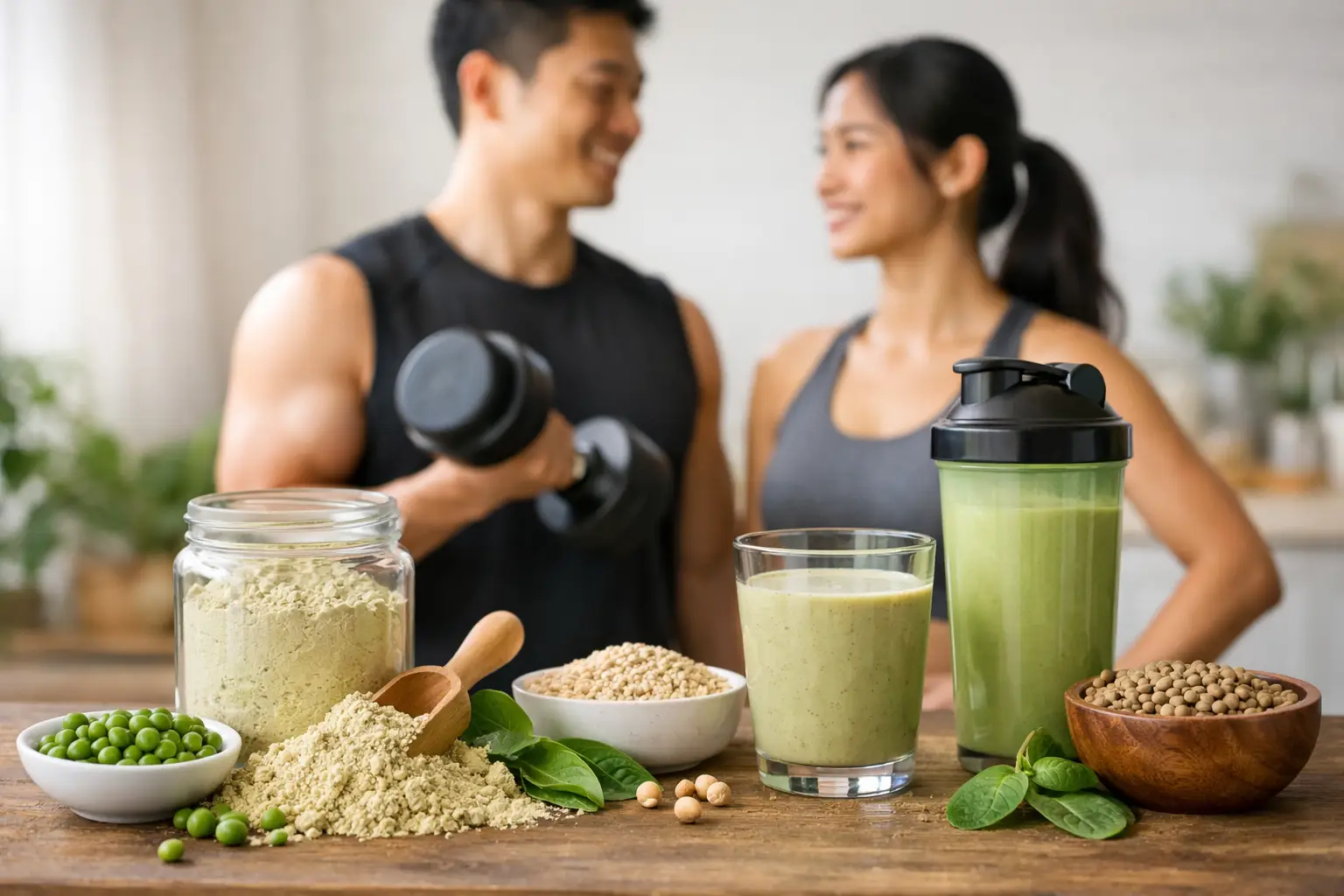
A rushed morning should not mean choosing between a nourishing breakfast and an ultra-processed one. A scoop of plant protein powder can turn oats, smoothies, yogurt, or even pancake batter into a more satisfying, nutritious meal in minutes. For busy parents, active adults, and anyone choosing more plant-based meals, it is one of the simplest ways to add proper nutrition to daily diet.
But not every powder deserves a spot in your pantry. The best choice is not necessarily the one with the most attractive marketing claim or the most premium packaging. It is the one that suits your nutritional needs, tastes good enough to use consistently, and reflects the clean-label standards you want for yourself and your family.
What Plant Protein Powder Is Really For
Plant protein powder is a concentrated source of protein made from ingredients such as peas, brown rice, hemp, pumpkin seeds, soy, sacha inchi seed or blends of several plant sources. Protein supports muscle building, maintenance, and repair, while also playing a vital role in healthy ageing by preserving lean muscle mass and reducing the risk of sarcopenia. Sarcopenia, an age-related condition of muscle loss, can impair strength, mobility, and independence — and is increasingly common among elderly people in Singapore.
Eating more protein can help make meals and snacks more filling, while also supporting steadier blood sugar levels. By slowing digestion and moderating the release of glucose into the bloodstream, protein helps reduce sharp spikes and crashes, keeping energy more stable throughout the day.
Think of Plant Protein Powder as a convenient nutrition boost to your daily meals and snacks — adding protein, satiety, and balance — rather than a substitute for real, wholesome meals. Whole foods still bring their own benefits: good carbs, fiber, healthy fats, vitamins, minerals, and the pleasure of eating a varied colorful diet. A protein powder works best alongside them. Blend it with fruit and chia seeds, stir it into overnight oats, or mix it into a cup of plant-based milk with a light lunch when your schedule is tight.
Wherever you are in your health journey, consistency matters more than perfection. Adding clean, whole‑food plant protein several times a week is often more beneficial than relying on processed supplements, which may offer weaker absorption and end up unused at the back of the cupboard.
Why a Plant-Based Option Appeals to So Many People
For some people, choosing plant protein is about following a vegetarian or vegan diet. For others, it is about avoiding dairy, managing a sensitive stomach or acne, or simply wanting more variety in their routine. Plant-based powders can be especially practical for households with different dietary preferences because they are dairy-free and can fit naturally into many recipes.
The experience varies by ingredient. Pea protein is popular for its mild flavor and substantial texture. Brown rice protein can be lighter but sometimes has a more earthy taste. Hemp (which is not allowed to be sold in Singapore) adds a naturally nutty note and may contribute fiber and beneficial fats. Blends such as Nature’s Superfoods Plant Protein Powder which features Sacha Inchi Protein can offer a more balanced texture and amino acid profile, while also providing added nutrition from Omega‑3s to support heart, brain, and joint health.
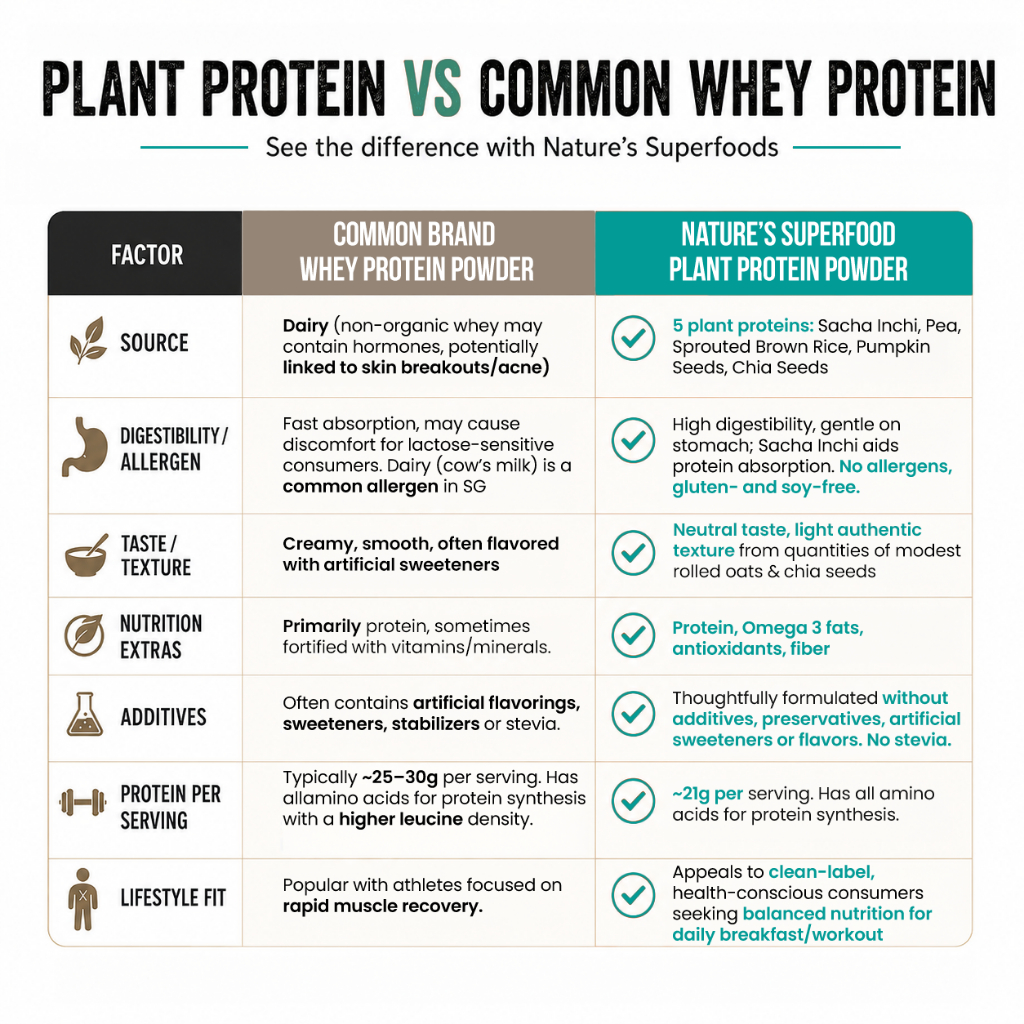
Here is a comparison between Nature’s Superfoods Plant Protein Powder vs Whey Protein
How to Choose a Clean Plant Protein Powder
The label tells you more than the front of the pouch. A recognizable ingredient list is a strong place to begin. You should be able to see what the protein is made from, what creates the flavor, and whether sweeteners or thickeners have been added.
Look closely at these practical details:
- Protein source: Choose an ingredient or blend that fits your diet and digestion. If you have a soy allergy or other food sensitivity, check the label carefully.
- Protein per serving: Compare serving sizes as well as the protein number.
- Added sugar: Unsweetened or lightly sweetened options make it easier to control the flavor of your smoothie or recipe. You may want to check for added artificial sweeteners or flavoring.
- Ingredient integrity: Avoid products built around artificial flavors, unnecessary fillers, preservatives, or a long list of additives when a simpler formula will do.
- Quality and sourcing: Organic sourcing and transparent safety standards can be especially reassuring for a product you may use often.
For Nature’s Superfoods, clean eating means choosing ingredients with a clear purpose: organic, thoughtfully sourced foods without refined sugar, unnecessary additives, or preservatives. That approach makes it easier to build a routine around foods that offer more of what your body needs and less of what it does not.
Do You Need a Complete Protein?
A complete protein contains all nine essential amino acids, which the body needs from food. Soy and Sacha Inchi Seed are naturally complete sources, while many other plant proteins vary in their amino acid balance. This does not mean you need to stress over every scoop.
Eating a varied diet across the day — with foods such as beans, lentils, quinoa, nuts, seeds, whole grains, and vegetables — naturally provides the full spectrum of amino acids your body needs. A blended protein powder can be a convenient way to add variety or ensure complete protein in one serving, but what matters most is your overall daily eating pattern.
What About Digestive Comfort?
Protein powders should leave you feeling nourished, not uncomfortably full. Some people find certain formulas cause bloating, particularly when they contain sugar alcohols, gums, large amounts of added fiber, or dairy-based ingredients. Others may react to a particular plant source.
Start with half a serving if you are trying a new product, and mix it with enough liquid. Give your body a few uses to adjust, then notice how you feel. If discomfort continues, a simpler ingredient list or another protein source may be a better match.
Easy Ways to Use Plant Protein Powder Every Day
The most useful powder is one that fits the foods you already enjoy. A smoothie is an easy starting point. For a balanced breakfast, blend protein powder with frozen berries, spinach, plain yoghurt (optional) and unsweetened plant-based milk. Nature’s Superfoods Plant Protein Powder already contains chia seeds, adding natural Omega 3s, fiber and texture, while the fruit brings brightness and extra nutrition.
For a no-blender option, stir a scoop of protein powder into overnight oats with plant-based milk to up the nutrition and protein level. Add sliced banana or berries before serving. Because some powders thicken as they sit, add a little extra liquid and mix thoroughly to avoid clumps.
You can also whisk protein powder into pancake or waffle batter, fold it into chia pudding, or blend it into homemade energy bites with oats, nut butter, and cacao. In baking, do not replace all flour with protein powder. It can make cakes and muffins dry or dense. Start by replacing a small portion of the flour, then adjust based on the texture.
After a workout, keep it simple. A shake made with protein powder, a banana, and your preferred milk can be convenient when a full meal is not immediately possible. Later, follow it with a nourishing meal that includes colorful vegetables, satisfying carbohydrates, and healthy fats.
Flavor Matters More Than You Think
A plain or lightly flavored plant protein powder gives you flexibility. It can move easily from a berry smoothie in the morning to a savory oatmeal bowl or baking recipe later in the week.
If you are new to plant proteins, do not judge the whole category by one gritty shake. Texture often depends on the protein source and how you prepare it. Blend for longer, use a frozen banana for creaminess, or mix with yogurt instead of water. Small changes can make a big difference to the final product.
Make Protein Powder Part of a Balanced Routine
Protein powder can be a helpful addition, but it is not a shortcut to wellness on its own. It cannot replace a diet rich in balanced nutrition — regular meals packed with fiber, vitamins, and healthy fats are still essential. Nor does it need to be used at every meal. Your protein needs depend on factors such as activity level, appetite, age, health goals, and the protein already present in your daily diet.
If you are pregnant, managing kidney disease, taking medication, or following a medically prescribed diet, check with a qualified health professional before making major changes to your protein intake. For most people, the practical goal is simpler: choose nourishing foods you enjoy and make them easy to reach for.
Keep a plant protein powder beside your oats, blender, or favorite shaker bottle. When the day gets busy, that small bit of preparation can help you choose a breakfast or snack that supports your energy, satisfies your hunger, and helps you thrive.