

-
No products in the cart.
Ceremonial Matcha Benefits for Everyday Energy & Focus
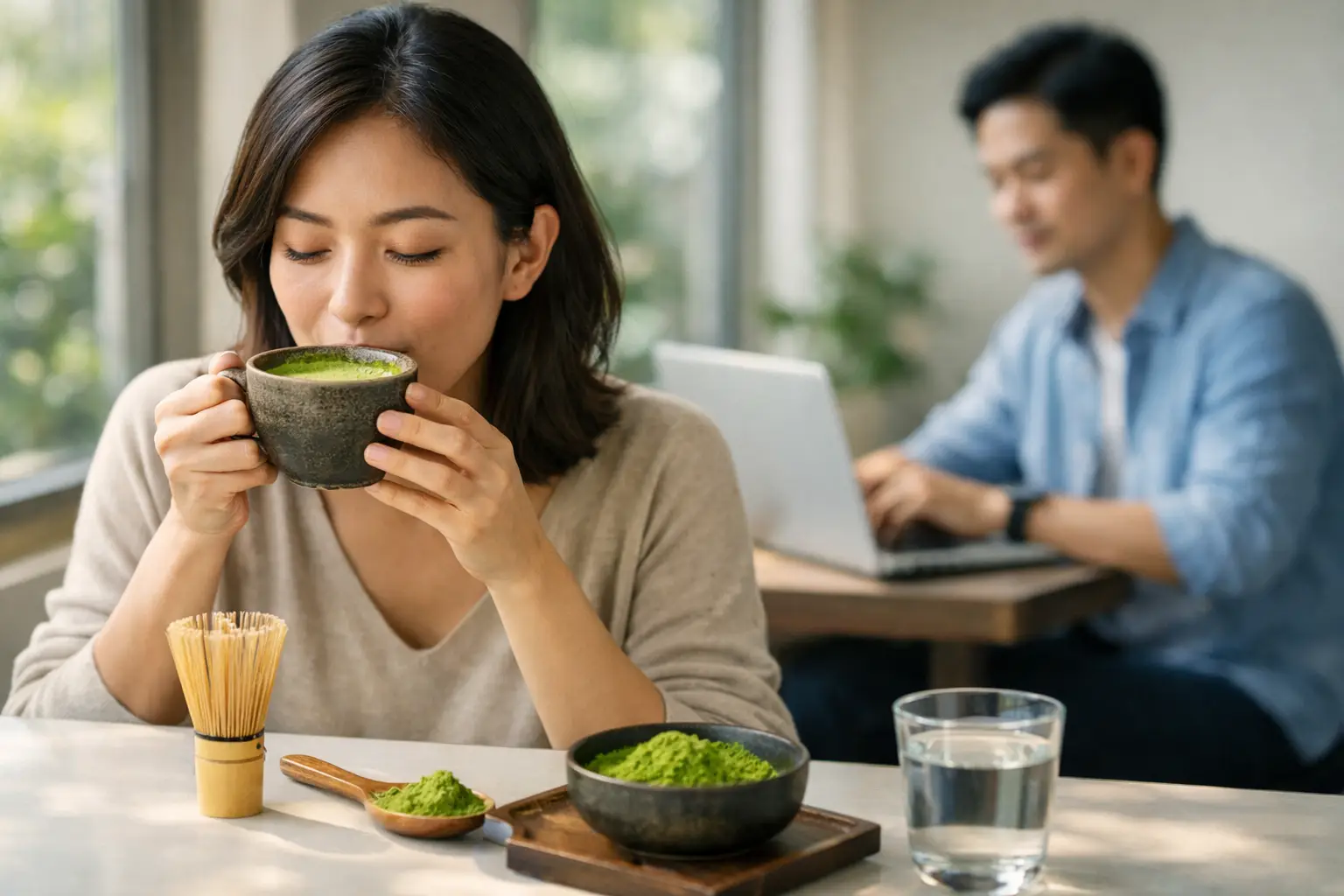
By mid‑afternoon, coffee often feels like the only way to push through a busy day. But that quick “shiok” lift can fade fast, leaving you with the dreaded coffee crash. Ceremonial matcha offers a different kind of ritual — a smooth, green cup that supports steady alertness and metabolism, while inviting a calmer pause in the middle of the hustle. A mindful boost, without the slump.
Ceremonial matcha is a finely ground green tea powder, traditionally whisked with warm water and savored on its own. Unlike steeped teas, you consume the whole leaf — unlocking naturally occurring, nutrient‑dense compounds such as EGCG antioxidants in every sip. Quality is everything. An organic, vivid green ceremonial‑grade matcha with a clean ingredient label delivers the smooth, balanced flavor that makes a daily matcha ritual not just healthy, but something to truly look forward to.
Ceremonial Matcha Benefits Beyond a Caffeine Boost
Matcha does contain caffeine — but its effect is gentler than coffee. That’s because matcha naturally carries L‑theanine, an amino acid linked to a calm, attentive state. Together, caffeine and L‑theanine create a unique synergy: steady focus, calm alertness, and sustained energy for hours, without the jittery spikes often tied to coffee. Add EGCG antioxidants into the mix, and every cup becomes both energizing and nourishing.
Of course, everyone responds differently. If you’re sensitive to caffeine, start small — about half a teaspoon — and enjoy it earlier in the day. Pregnant or breastfeeding individuals, those on medication, or anyone managing a health condition should always consult with a qualified healthcare professional on their caffeine intake.
Antioxidant-rich whole-leaf tea
Green tea is known for naturally occurring polyphenols, including catechins such as EGCG. These antioxidant compounds help protect cells from oxidative stress as part of an overall balanced lifestyle. Research has shown that EGCG, together with naturally occurring caffeine in matcha helps enhance fat oxidation during 30-min brisk walking, meaning it helps the body burn more fat as fuel during moderate exercise.
The whole-leaf format is what makes matcha distinct. With brewed tea, the leaves are discarded after steeping. With matcha, the powdered leaf remains in your cup. That does not make every matcha drink automatically healthy. A large matcha latte made with sweetened syrups can quickly become more dessert than daily wellness habit. The simplest preparation keeps the focus on the tea (and nutrients) itself.
Matcha isn’t a cure or substitute for medical care, but it can be a nourishing part of a balanced diet with vegetables, fruit, legumes, whole grains, and quality protein.
A mindful way to support focus and relaxation
There is also a practical benefit that has little to do with nutrition labels. Making matcha takes a minute or two of attention: sift, whisk/stir, sip. That small pause can create a useful transition before a focused work block, school pickup, workout, or household chore.
Try pairing matcha with a real breakfast rather than relying on it alone. For example, enjoy it alongside overnight oats, chia pudding, eggs, or a bowl of low-sugar granola with unsweetened yogurt and fruit/nuts. Combining your drink with fiber, protein, and nourishing fats can help make your morning feel more satisfying and filling.
Taken daily, research has shown that ceremonial matcha can help lower cortisol and stress responses- thanks to its natural synergy of L‑theanine, EGCG, and caffeine. This is particularly encouraging for post‑menopausal women seeking to reduce cortisol levels, which play a role in weight control, while also supporting calm focus.
Why Ceremonial Grade Matters
Ceremonial grade is generally chosen for drinking straight because it is designed to be smooth and less bitter than later-harvest matcha powder intended mainly for baking or blending recipes like latte. The term is helpful, but it is not a universal guarantee of excellence. Look beyond the front label and consider freshness, color, aroma, origin transparency, and ingredient purity.
Organic Ceremonial Matcha Powder is made from the youngest, most tender first flush leaves — the very first harvest of the season, prized for their superior flavor and high nutrient density — of organically grown Japanese green tea (Camellia sinensis). The tea plants are carefully shade-grown for several weeks before harvest, a traditional method that reduces sunlight exposure and encourages the plant to produce higher levels of chlorophyll and L‑theanine. These prized leaves are then hand-picked, steamed, dried, and stone-milled into an ultra-fine, silky powder. Good ceremonial matcha is typically a vivid green, with a fresh grassy aroma, subtle sweetness and umami richness. Dull olive or brownish powder may signal age or poor storage. A very bitter taste can come from water that is too hot, too much powder, or lower-quality matcha (often comes from later harvests), though personal preference plays a role too.
For a clean everyday choice, select first-flush ceremonial matcha made from 100% tea leaves without refined sugar, fillers, artificial flavors, or unnecessary additives. Organic sourcing can be especially reassuring for a powdered whole-leaf product as no synthetic pesticides/fertilizers are used. Nature’s Superfoods focuses on thoughtfully sourced, organic, clean-label pantry foods because everyday wellness should not require decoding a long ingredient list or come with concerns about harmful pesticides.
Freshness and storage make a difference
Matcha is delicate. Heat, light, moisture, and air can dull its color and flavor over time. Keep it tightly sealed in a cool, dry place away from direct sunlight. If your kitchen is warm or humid, refrigeration can help preserve freshness, as long as the container is tightly closed and allowed to come to room temperature before opening to reduce condensation.
Buy a size you can realistically finish while it is fresh. A smaller pouch/ canister used consistently is often a better choice than a large container that sits forgotten at the back of the pantry.
Beyond storage, country of origin also matters. Research has shown that Japanese matcha, especially from the first harvest, tends to be more nutrient-dense — higher in L‑theanine and antioxidants (esp. EGCG) — compared to Chinese matcha, which is often produced from later harvests and yields a stronger, more astringent flavor. Choosing authentic Japanese matcha ensures not only better freshness and flavor but also a richer nutritional profile.
How to Enjoy Ceremonial Matcha at Home
Traditional matcha is wonderfully uncomplicated. Start with about one teaspoon of sifted matcha in a bowl or wide mug. Add a small splash of warm water, ideally not boiling, then whisk briskly in a quick zigzag motion until the powder is smooth and a light foam forms. Add more warm water and drink right away.
If you prefer a latte, whisk the matcha with warm water first, then add unsweetened plant milk. Oat, soy, and coconut milk each bring a different texture and flavor, so it depends on whether you want something creamy, neutral, or lightly tropical. Keep sweeteners modest. Cinnamon, vanilla, monk fruit sweetener, or a small amount of date syrup can add warmth without covering the character of the tea.
Ceremonial matcha can also fit naturally into food, although a culinary-grade matcha powder is often the more economical option for recipes like latte. Stir a small amount into yogurt, blend it into a banana smoothie with plant protein, or add it to chia pudding. The key is to think of matcha as a supporting ingredient to boost nutrition.
When Matcha May Not Be the Right Fit
Healthy routines are personal. Matcha may not suit you if caffeine affects your sleep, raises your anxiety, or causes stomach discomfort. It can also interact with some medications, and tea compounds may affect iron absorption when consumed with iron-rich meals. If that is a concern for you, consider enjoying matcha 1-2 hours before/after meals and speak with your healthcare provider for individualized guidance.
More is not necessarily better. One thoughtfully prepared cup with half teaspoon ceremonial matcha can be plenty. The goal is steady nourishment and a ritual you genuinely enjoy, not chasing a bigger caffeine dose or expecting one ingredient to carry your wellness routine.
A good matcha habit is built on the same principle as every lasting food choice: choose ingredients you trust, prepare them simply, and return to them often enough that they become part of real life.